The Empty Rooms of Wallachia
Updated: Apr 29
The Eastern European village house can tell a strange story.
In parts of rural Romania, the biggest houses are not always the fullest. You notice them soon enough once the road leaves Bucharest behind. A lane of modest homes gives way to one with a taller roof, heavier gates, an extra floor that seems slightly too ambitious for the road it sits on. Some are immaculate. Others look almost finished, as if waiting for one more season of earnings.
At first glance, they suggest prosperity. Often, they tell a more complicated story.
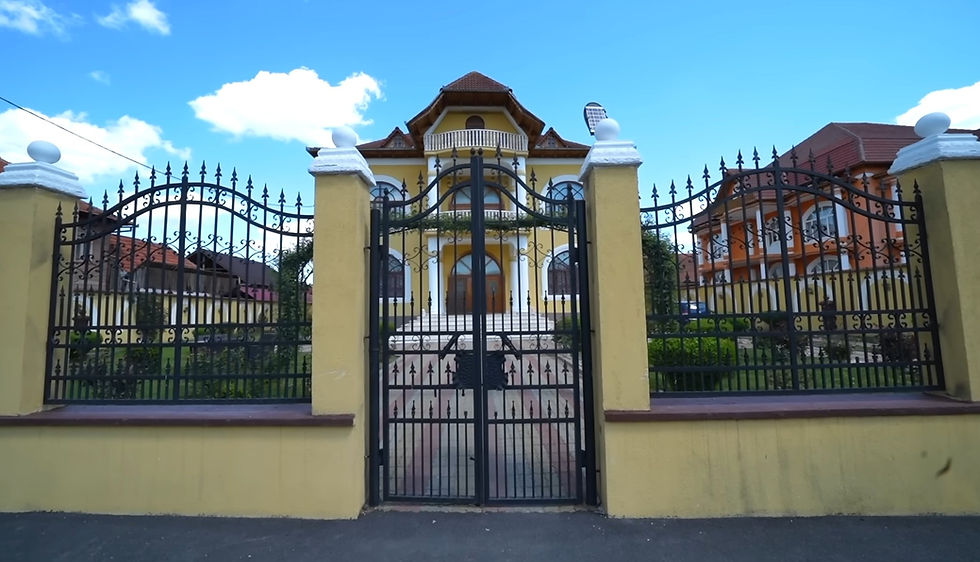
Romania has spent years shaped by people leaving for work. In 2023, 244,000 Romanian citizens emigrated to OECD countries, with Germany taking the largest share. Italy, Spain and Britain have long been among the main destinations too. That wider map helps explain the houses. In the Wallachian countryside, a large village home is often less a private flourish than the visible result of wages earned elsewhere. Time abroad settles into concrete. Years on building sites, in warehouses or in care work return not as stories, but as roofs, balconies and added rooms.
A villager put it to me simply: “You work there so you can build here.”
That line says more than many theories. Romania received about $9.5 billion in personal remittances in 2024, according to the World Bank. Money on that scale does not just lift household income. It changes the look of entire villages.
Some of these homes seem too large for the lives inside them. A couple returns in summer, then leaves again. A grandmother may live there through most of the year while the children who paid for it are still in Berlin, Birmingham and beyond. An upper floor waits for a future that keeps being delayed by the need to keep earning. That is what gives these places their peculiar atmosphere.
There is an EU story inside these mansions too, though not the polished Brussels version. Free movement is often discussed in the language of economics. Here, it appears in a more intimate form: wages made elsewhere, money sent back, and the hope that distance will harden into security at home. Romania has lived that reality at household level for years.
None of this is tragic. There is pride in these buildings, and rightly so. They are often the material proof of hard work done far from home. But there is melancholy in them as well, because a proper life in one place has often depended on being absent from it.
These oddities are rarely just ‘houses.’ They are migration made visible: a story of Romania shaped by actions both within its borders and beyond them.
Photography: All photographs accompanying this piece were taken by Dawud during the trip described.


Comments