Goodbye Paris, Hello Bamako
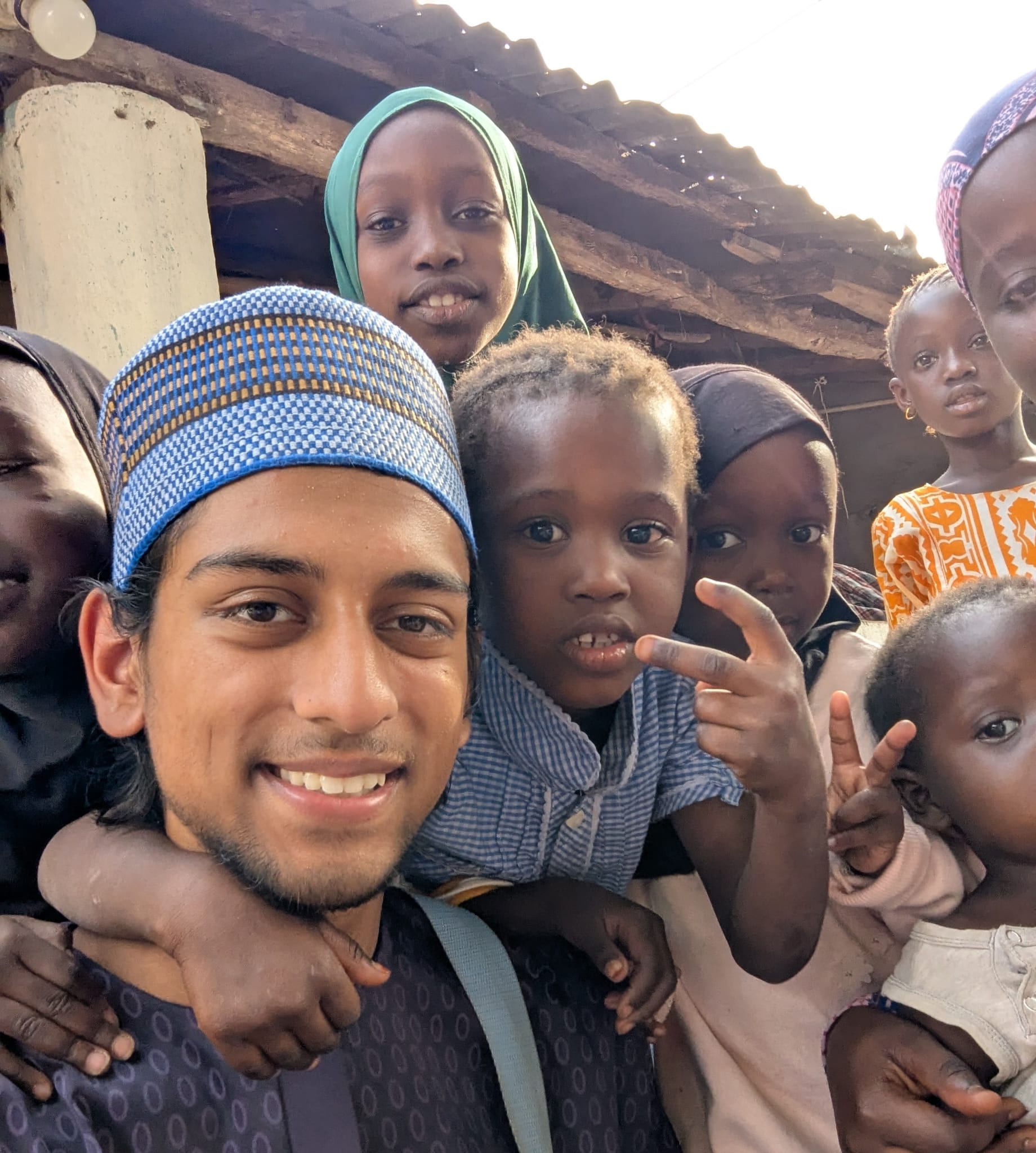
In Bamako, it is possible to forget, briefly, what Mali has become in headlines. The country today is shaped by a single, stubborn idea: we will not be managed from elsewhere. You hear it in official language about sovereignty and dignity. You feel it in the country’s sharp turn away from French influence, the closing of political space, and the re-wiring of alliances across the Sahel.
It shows up in small, daily signals, not just geopolitics. French is still the language of paperwork and official signage, but it no longer feels like the default cultural North Star. In conversation, people slip easily into Bambara and other local languages, and the mood around French influence has shifted from dependency to rejection. Even the symbols of “who matters” feel in flux, as Mali tries to rewrite its relationship with the outside world on its own terms. Anti-colonialism here is not a museum slogan. It is a living force, used to justify decisions that reach right down into the texture of everyday life.

And that’s the thing people miss. Sovereignty is good. Necessary, even. But it is never free. Bamako has that familiar West African pulse I’ve felt in Senegal and The Gambia, for example. Traffic chaos with its own logic, cafés full, music floating from somewhere unseen, people getting on with the business of being alive. It is not that danger isn’t present. It is. But it is not the only atmosphere.
Then you drive north and that illusion thins, mile by mile, until it tears.
People talk about a “line” in Mali. Not a neat border on a map, more a psychological threshold. South of it, you can move with caution and common sense. Beyond it, movement becomes negotiation: with checkpoints, with rumours, with whatever group is deciding the rules this week. I did not make it all the way to Timbuktu. I wanted to. I stopped because the risk stopped feeling theoretical.
I did, though, reach Djenné. And that journey is where Mali stopped being an article topic and became physical.
On the road, I heard gunshots. Not the cinematic crack you expect, but something sharper, more casual, like the landscape exhaling violence as background noise. Then my wing mirror went. A rock, most likely, thrown up by a passing vehicle. But in the moment, my body made its own decision: bullet. Heart racing, mouth dry, brain running through exits that did not exist. Fear is not always rational, but it is often accurate in one sense: it tells you what your environment can plausibly contain.

Djenné itself felt oddly safer than the road that led to it. Its religious and historic gravity creates a kind of protection, a social boundary that armed actors sometimes respect because it is useful to respect it. That is one of Mali’s quiet truths: places can be spared not because they are innocent, but because they matter - in this case because of the Grand Mosque of Djenné, the world’s largest mud building.

Outside the capital, it is not Boko Haram that shapes the day-to-day. Mali’s conflict is more often driven by Sahelian jihadist networks like Jama'at Nusrat al-Islam wal-Muslimin and Islamic State-aligned factions operating across the centre and north. The effect, for civilians and travellers, is the same brutal arithmetic: who controls the road controls the price of food, fuel, and time.
This is where Mali’s sovereignty story gets complicated, because on paper the state has been asserting itself hard.
Mali’s break with ECOWAS became official on 29 January 2025, alongside Burkina Faso and Niger, a three-country exit framed as sovereignty, and felt by many as a leap into a harder kind of self-reliance. Political parties were dissolved by decree in May 2025, a move condemned by UN human rights experts as a sharp reversal for pluralism. And before that, a new constitution was approved in June 2023 with a reported turnout of about 38%, expanding presidential powers in ways the junta framed as “rebuilding” the state.
You can feel those shifts even if nobody mentions them out loud. The state is pulling away from old French dependency, yes, but it is also pulling power inward. The language is autonomy. The lived reality can be narrower space to speak, organise, or challenge.
This is the piece outsiders miss when they reduce Mali to either “anti-colonial awakening” or “security collapse”. Both are true, and both are incomplete.
In Bamako, sovereignty looks like flags, speeches, and policy announcements. North of the line, sovereignty looks like whether the next town is reachable without paying someone, persuading someone, or being mistaken for someone. It looks like the road itself, and who dares to use it after dark. It looks like the difference between a cracked wing mirror and a cracked life.
I left Mali with two impressions that sit uncomfortably together.
First: you can be in Mali and feel safe, at least some of the time, in some of the places, if you understand the rules and accept the limits.
Second: the moment you start testing the edges, Mali reminds you that safety is not a condition here. It is a temporary permission.
Photography: All photographs accompanying this piece were taken by Dawud during the trip described.
Comments